The Four D's
There's More Than Dyslexia?
Short answer: Yes! Dyslexia affects how the brain processes language. Yet you or your child might struggle in the classroom in ways that don’t impact spelling or reading, and may have been told you could have dyslexia. In some cases, those challenges may be related to a different neurological condition. That’s why it’s important to stay informed and consider the full range of possible neurobiological differences when seeking answers and support. Those differences are known as the Four D’s.
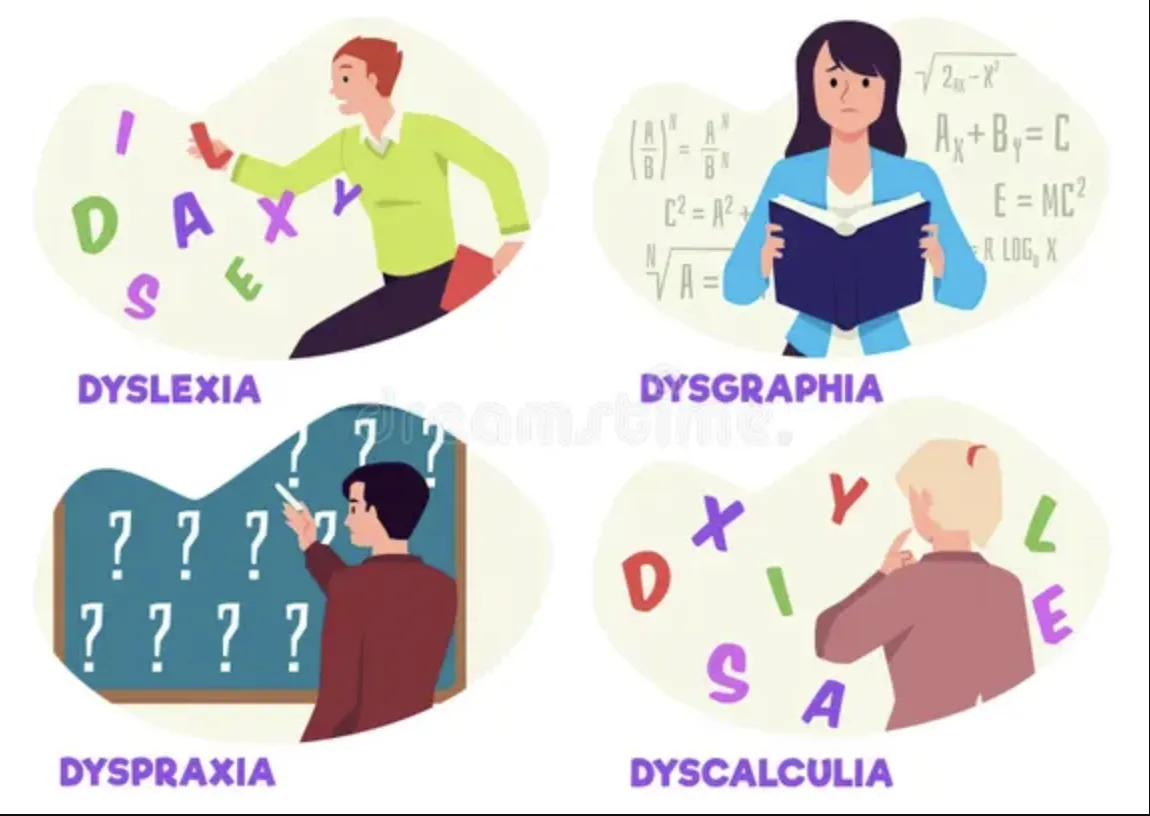
Here’s a quick breakdown of what the Four D’s are:
Dyslexia
Dys = difficulty and Lexis = speech/language/reading
Neurological disorder affecting the ability to read, spell, and write
Most common of the four
Dysgraphia
Dys = difficulty and Graph = writing
A neurological disorder affecting the area of writing, organizing letters, sentences, words, and numbers.
Can affect handwriting
Dyspraxia
Dys = difficulty and prax = action
Neurological impairment affecting motor skills, planning of actions, thoughts, and speech
Also known as DCD - Developmental Coordination Disorder
Dyscalculia
Dys = difficulty and calculia = calculate (math relations)
Neurological disorder affecting the understanding of numbers and processing math concepts
Math requires several different skills, making it difficult to process the necessary skills well and quickly
Understanding the Four D’s can bring clarity to what may be happening in your or your child’s brain. The encouraging news is that each of the D’s comes with effective strategies and support. As your understanding grows, so does your sense of direction and hope. This journey doesn’t have to feel overwhelming. Help is available, and you don’t have to navigate it alone.
If you are suspicious that maybe one of the other D’s may be present, start looking into it. Do a little digging about the D you are interested in. Knowledge is power, and the more you know about something, the better off you are in dealing with it. It is also very common that people may have several learning differences. The good news is that some strategies and methods will help all types of learning differences. You are not alone. There is hope!
References
Full Spectrum Education. The Four D’s: Dyslexia, Dysgraphia, Dyscalculia, and Dyspraxia.
https://www.fsedu.com.au/blog/the-four-ds-dyslexia-dysgraphia-dyscalculia-and-dyspraxia/
International Dyslexia Association Editors. Understanding Dysgraphia.
https://dyslexiaida.org/understaning-dysgraphia/
Science Direct Editors. Dyscalculia. https://sciencedirect.com/topics/neuroscience/dyscalculia.
Science Direct Editors. Dyspraxia. https://www.sciencedirect.com/topics/psychology/dyspraxia